
High in the Peruvian Andes, where the air feels thinner and the sky stretches endlessly above snowcapped peaks, lies one of the most breathtaking landscapes in Peru: Humantay Lake. Its intense turquoise waters rest beneath the majestic Salkantay Mountain, creating a natural sanctuary that feels both powerful and sacred.
But when is the best time to visit Humantay Lake? Should you plan your trip during the dry season for clear skies, or embrace the dramatic clouds of the rainy season? In this complete guide, you’ll discover everything about Humantay Lake weather, dry and rainy seasons, temperature, altitude, difficulty, and practical travel recommendations — along with expert insight from AndeXperience Travel Agency, your trusted local operator in the Andes.
The best time to visit Humantay Lake is during the dry season (May to September). During these months, rainfall is minimal, skies are clearer, and the lagoon’s iconic turquoise color shines under the Andean sun.
Due to the high Humantay Lake altitude of 4,200 meters (13,779 ft), weather conditions can change rapidly. Even on sunny days, temperatures drop significantly in the early morning.
Average Humantay Lake temperature:
The sun is intense year-round because of the elevation, making proper sun protection essential.
This period is widely considered the ideal time for trekking Humantay Lake.
Advantages of the dry season:
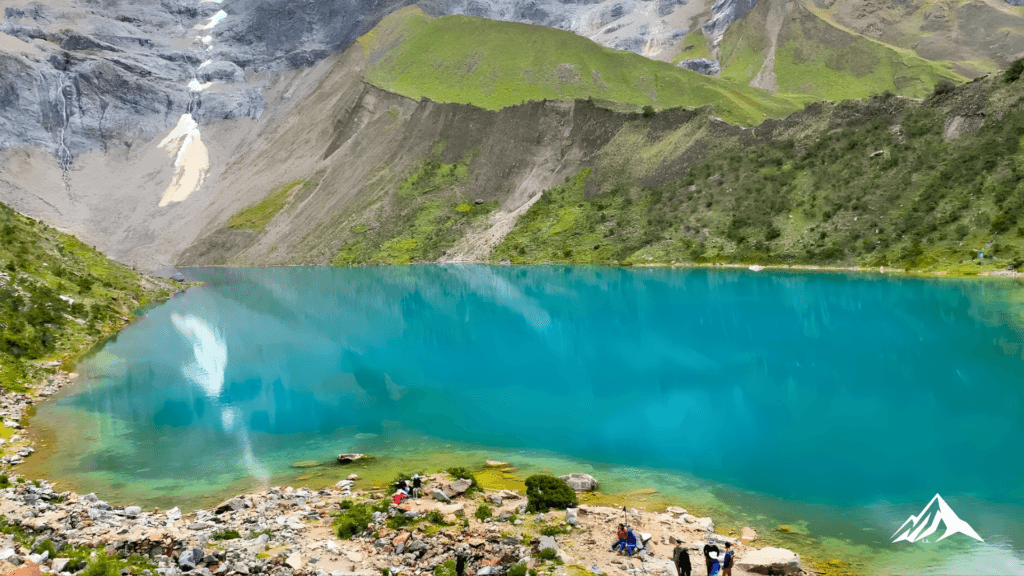
Humantay Lake in May offers excellent weather with slightly fewer crowds.
Humantay Lake in June is extremely popular due to peak tourism season in Cusco, especially around local festivals.
Traveler Tip: If visiting in June or July, book your Humantay Lake tour in advance to secure availability.
The rainy season transforms the Andes into a vibrant green landscape. However, it also brings:
That said, the atmosphere becomes mystical — clouds wrapping around Salkantay create unforgettable scenery.
For travelers seeking fewer crowds and dramatic landscapes, the rainy season can still be rewarding — especially with a professional guide ensuring safety.
The hike to Humantay Lake is relatively short but physically demanding due to altitude.
Humantay Lake difficulty: Moderate
Hiking duration: 1.5–2 hours uphill
Main challenge: High elevation
Acclimatization in Cusco for at least 2 days before the trek is strongly recommended.
Beyond its natural beauty, the lagoon holds spiritual importance. In Andean worldview, mountains like Salkantay are considered sacred Apus — protective spirits. It is common to witness small offerings of coca leaves to Pachamama (Mother Earth), a tradition that reflects deep respect for nature.
Is Humantay Lake worth it? Without question. Few places combine accessibility, raw beauty, and cultural depth so perfectly.
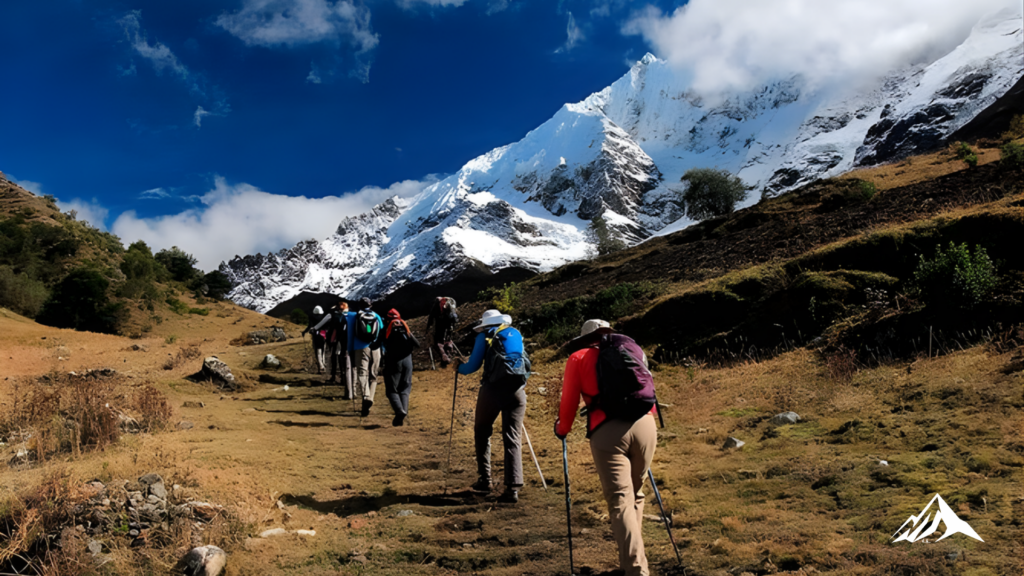
If you’re wondering how to get to Humantay Lake, here’s what you need to know:
Most travelers opt for a Humantay Lake day trip from Cusco. A typical tour includes:
Choosing a reputable operator like AndeXperience Travel Agency ensures:
Booking locally not only guarantees safety but also supports Andean communities.
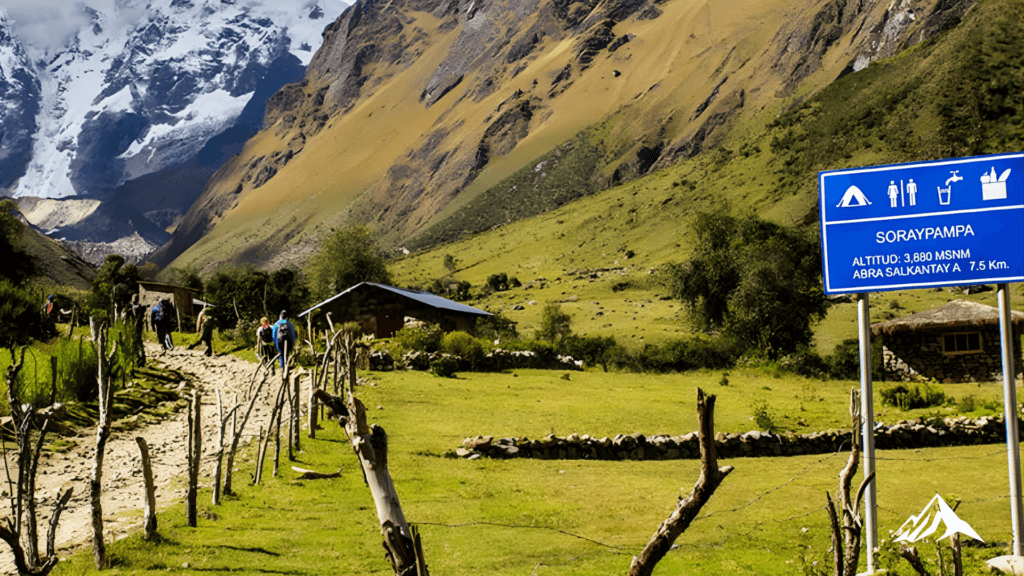
Mountain weather requires preparation.
Important Note: UV radiation is strong even on cloudy days. Protect your skin and stay hydrated.
Understanding the best time to visit Cusco and the best time to visit Peru helps you plan your overall itinerary.
Many travelers combine Humantay Lake with Machu Picchu, Sacred Valley, or Salkantay treks for a more immersive Andean experience.
May, June, and September offer the best balance between weather and crowds.
Layered clothing, sunscreen, water, comfortable hiking shoes.
Book a tour from Cusco for convenience and safety.
Spend at least two nights in Cusco before the trek to acclimatize properly.
Pro Tip: Avoid scheduling Humantay Lake on your first day in Cusco due to altitude risk.
Humantay Lake is more than a postcard-perfect destination. It is a place where nature, culture, and spirituality converge. The silence of the Andes, the reflection of Salkantay in the water, the crisp mountain air — everything invites you to slow down and reconnect.
In Peru, every journey tells a story. And Humantay Lake tells one of resilience, beauty, and sacred tradition.
Discover this unforgettable experience with AndeXperience Travel Agency.
Book your next adventure with us and experience authentic Peru.
Peru is not just a destination — it’s a journey through time. From the Pacific coast where colonial balconies overlook vibrant plazas, to the majesty of the Andes and the mystical Amazon rainforest, each region tells a different story. Imagine walking along ancient Inca streets at sunrise, tasting world-class cuisine in Lima, sailing on the highest navigable lake in the world, and watching the mist rise over Machu Picchu.
If you’re wondering how many days in Peru are enough, this complete guide will help you design the best route in Peru, whether you have 7, 10, or 15 days. Here, you’ll discover practical routes, cultural insights, real travel tips, and expert recommendations from AndeXperience Travel Agency, your trusted local operator.
Peru is divided into three natural regions: coast, highlands, and jungle. Each offers a different climate, energy, and travel style. The best route in Peru will depend on your available time and the type of experience you’re looking for.
Ideal for first-time visitors who want to see the highlights.
Recommended route: Lima – Cusco – Sacred Valley – Machu Picchu
Explore the Historic Center (UNESCO World Heritage Site), stroll through Miraflores, and discover why Lima is considered the gastronomic capital of Latin America.
Walk through ancient Inca streets, visit Sacsayhuamán and Qorikancha, and acclimatize to 3,400 meters (11,150 ft) above sea level. Cusco was the capital of the Inca Empire and still preserves its sacred energy.
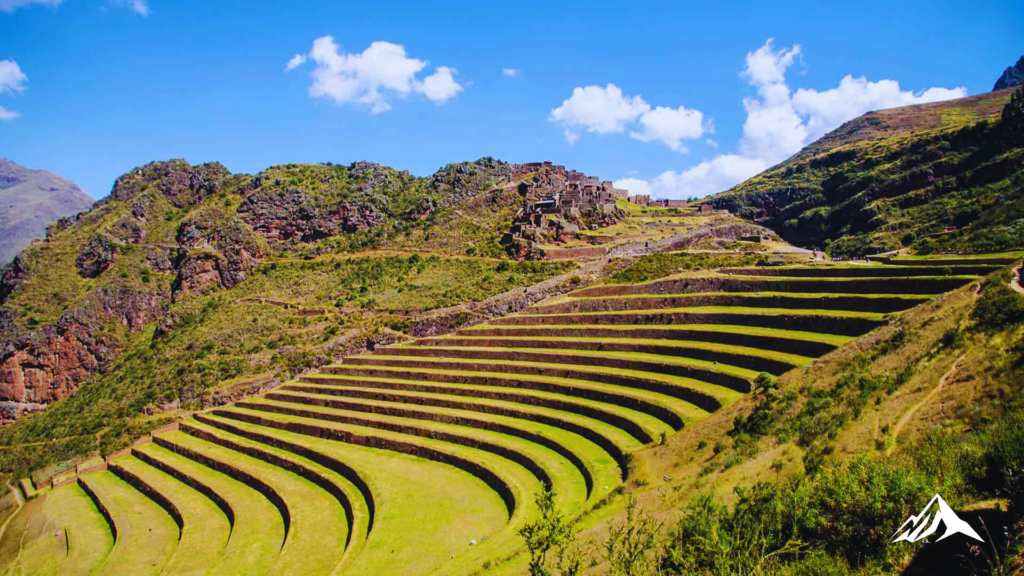
Discover the terraces of Pisac, the living Inca town of Ollantaytambo, and the mysterious circular terraces of Moray.
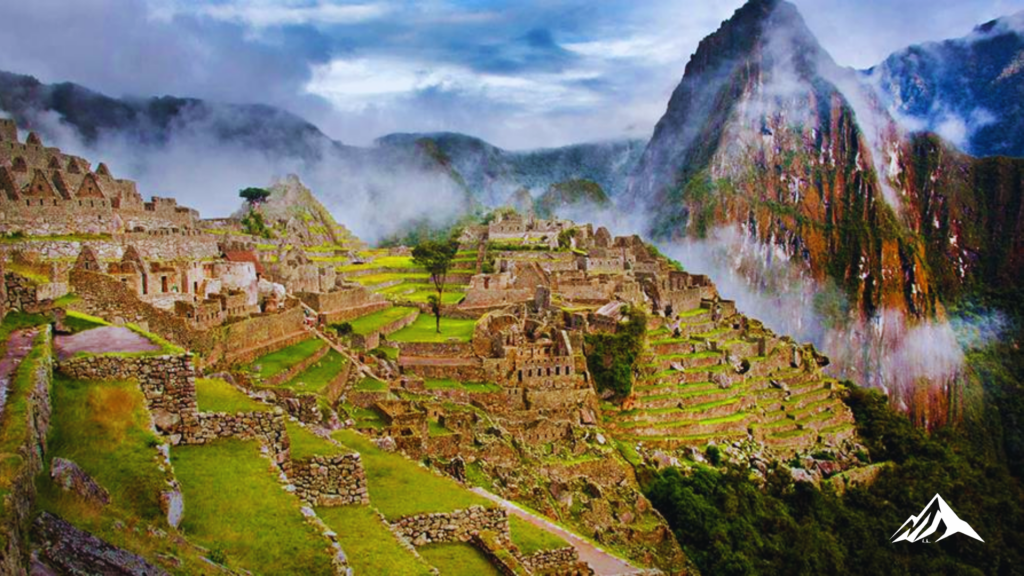
Travel by train from Ollantaytambo and explore one of the Seven Wonders of the Modern World. Watching the sunrise at Machu Picchu is an experience that goes far beyond photography — it’s spiritual.
Traveler tip: Book Machu Picchu tickets 2–3 months in advance, especially between May and September. This itinerary is considered one of the best routes in Peru for first-time travelers.
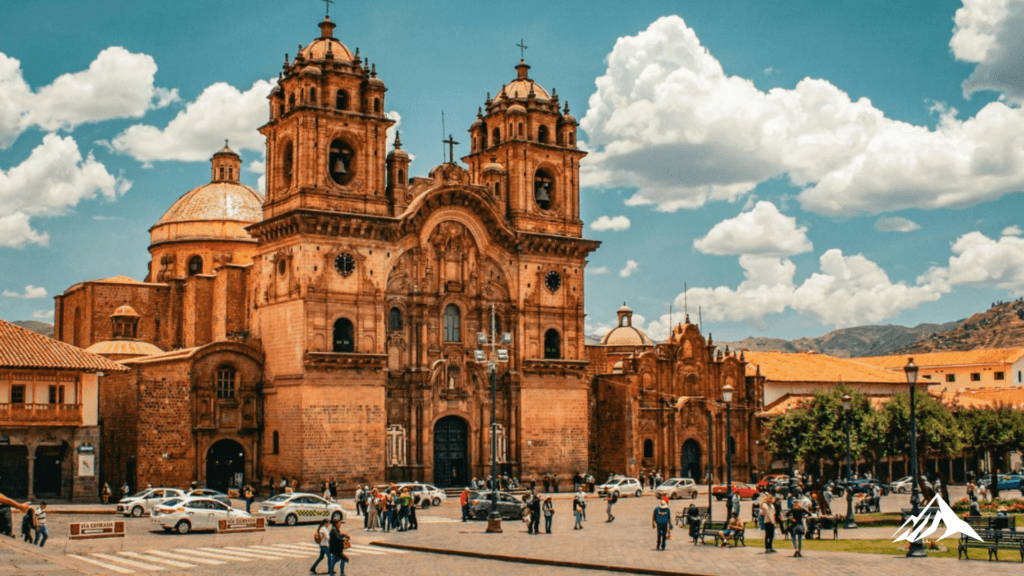
A balanced Peru travel route combining culture and nature.
Recommended route: Lima – Cusco – Sacred Valley – Machu Picchu – Lake Titicaca
In addition to the 7-day itinerary:
Travel to Puno across breathtaking Andean landscapes. Visit the floating Uros Islands and Taquile Island, where textile traditions have been preserved for centuries. Lake Titicaca sits at 3,812 meters (12,507 ft) above sea level and is considered sacred in Andean cosmology.
This 10-day plan is among the best routes in Peru for travelers seeking deeper cultural immersion and authentic contact with local communities.
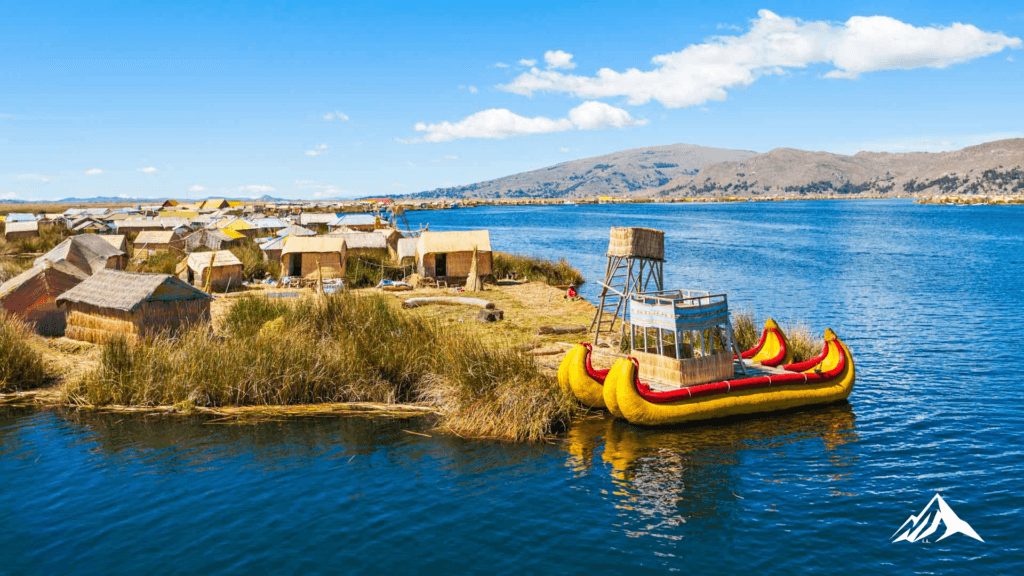
Perfect for travelers seeking a complete and diverse experience.
Recommended route: Lima – Paracas – Arequipa – Cusco – Machu Picchu – Lake Titicaca – Amazon
Marine wildlife and dramatic landscapes where the desert meets the ocean. If you’d like to experience this destination in an organized and safe way, discover our https://www.andexperience.travel/en/paracas-ballestas-islands-national-reserve-tour/ expert guides and private transportation.
“The White City,” built from volcanic sillar stone and surrounded by the Misti volcano.
One of the deepest canyons in the world, home to the majestic Andean condor.
The Peruvian Amazon covers nearly 60% of the country’s territory. From Puerto Maldonado, eco-lodges offer jungle hikes, macaw sightings, and night excursions.
This route is ideal for both a backpacking itinerary in Peru and a luxury Peru itinerary with premium trains, boutique hotels, and private guides.
Pro tip: If you want to travel without rushing and enjoy authentic experiences, 15 days is the perfect amount of time.
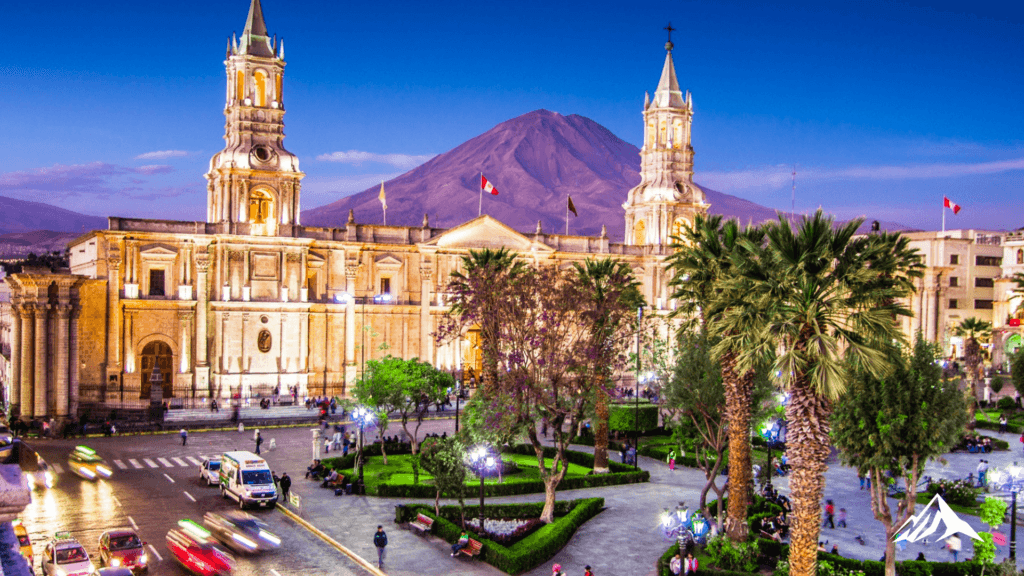
Peru’s greatness is not only found in its landscapes, but in its living culture.
Ceviche, lomo saltado, causa limeña, and Nikkei cuisine tell stories of migration and creativity. Peru has more than 3,000 varieties of potatoes and a unique culinary biodiversity in the world.
Cusco combines perfectly fitted Inca stone walls with colonial churches. Many Spanish constructions were built over Inca foundations — a symbol of resilience and cultural continuity. To fully explore these historic monuments, we recommend our https://www.andexperience.travel/en/cusco-city-tour/ , which includes visits to Sacsayhuamán, Qorikancha, and the city’s main colonial temples.
The Incas mastered terrace farming, hydraulic systems, and astronomical alignments. Sites like Moray and Maras reveal knowledge far ahead of their time.
Important note: Spend at least one full day in Cusco to acclimatize before visiting Machu Picchu.
From the dunes of Huacachina to glacial lakes like Humantay, Peru surprises travelers with its diversity.
Understanding the seasons is key when planning your Peru travel route.
7 Days
Ideal for: First-time visitors
Main destinations: Lima, Cusco, Machu Picchu
Style: Classic
10 Days
Ideal for: Culture lovers
Main destinations: + Lake Titicaca
Style: Balanced
15 Days
Ideal for: Explorers
Main destinations: + Amazon, Arequipa, Paracas
Style: Complete experience
International flights arrive in Lima. From there, domestic connections operate to Cusco, Arequipa, Juliaca (Lake Titicaca), and Puerto Maldonado (Amazon).
Boutique hotels in Cusco’s historic center, eco-lodges in the Amazon, and luxury trains to Machu Picchu elevate the experience.
Peru is a country where ancient civilizations whisper among stone temples, where flavors amaze the world, and where every landscape awakens the adventurous spirit.
Whether you choose a 7-day Peru itinerary, a 10-day Peru itinerary, or 2 weeks in Peru, you will live unforgettable moments.
The real question is not how many days in Peru you need — but how deeply you want to experience it.
Discover this journey with AndeXperience Travel Agency.
Book your next adventure and experience the authentic Peru.
High in the Peruvian Andes, where the sky feels within reach and silence has its own voice, rainbow mountains rise like true natural masterpieces. Beyond their breathtaking beauty, these landscapes hold deep spiritual meaning for Andean cultures.
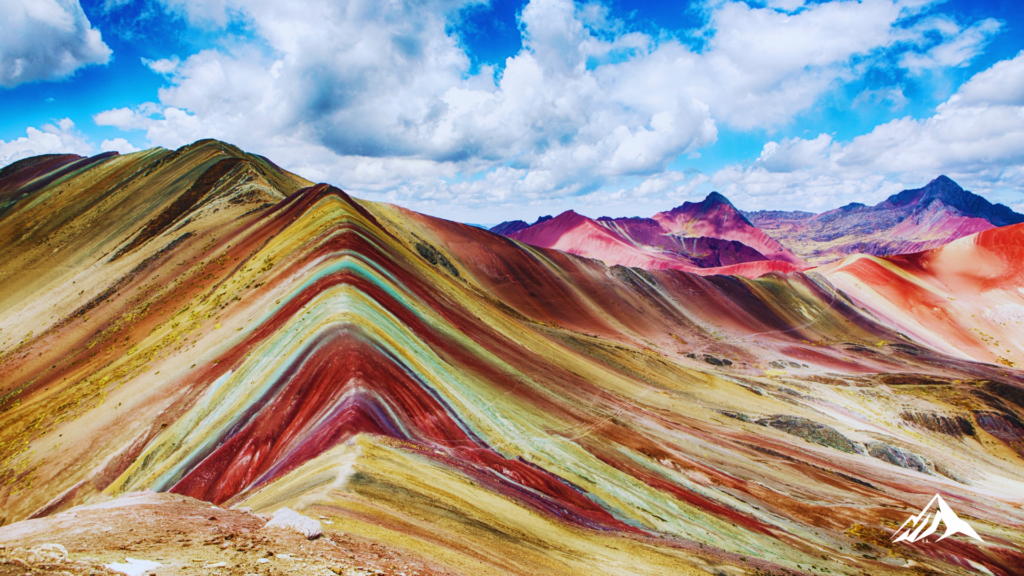
Palcoyo, one of the lesser-visited rainbow mountains in Cusco, offers a more intimate and authentic experience—perfect for travelers seeking a deeper connection with the spirit of the Andes.
This article invites you to explore rainbow mountains as Andean symbols, discover the spiritual value of Palcoyo, and understand how colors, nature, and ancestral worldview intertwine to create a transformative journey. A path that blends living culture, history, and practical travel tips for the modern explorer.
Rainbow mountains in the Andes are not only a geological phenomenon; for Andean communities, they represent the tangible manifestation of the Earth’s energy. Their vibrant hues come from minerals such as iron, copper, and sulfur—but their meaning goes far beyond science.
Since pre-Inca times, these mountains have been recognized as apus, protective mountain spirits that safeguard local communities. Each color carries symbolic meaning linked to the balance of the Andean universe.
Traveler’s Tip: For ancient inhabitants, walking across a rainbow mountain was a way of communicating with Pachamama (Mother Earth).
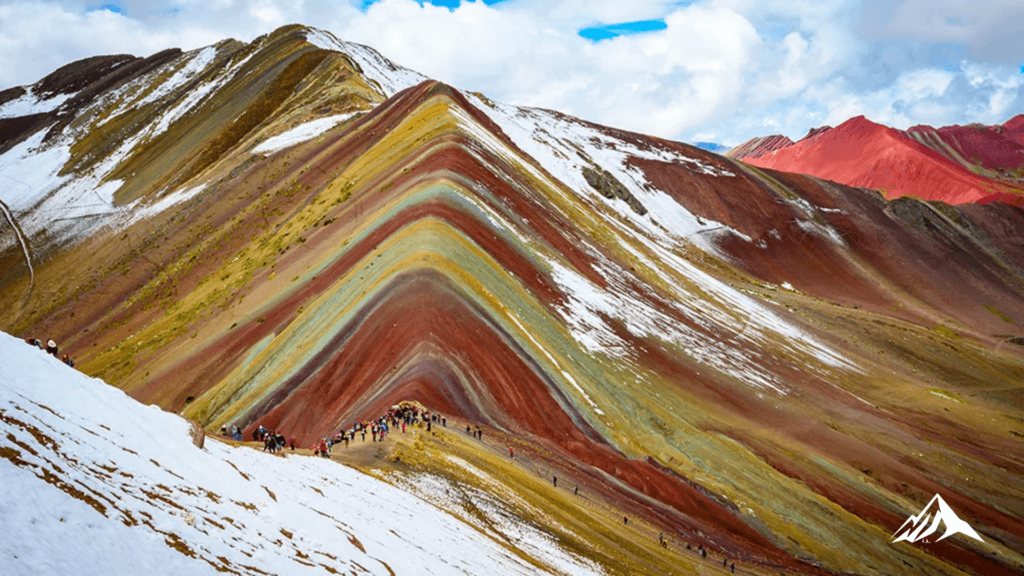
The symbolism of rainbow mountains can only be fully understood through the Andean worldview, where every element of nature is alive and filled with energy.
These colors reflect the harmonious relationship between humans, nature, and the cosmos.
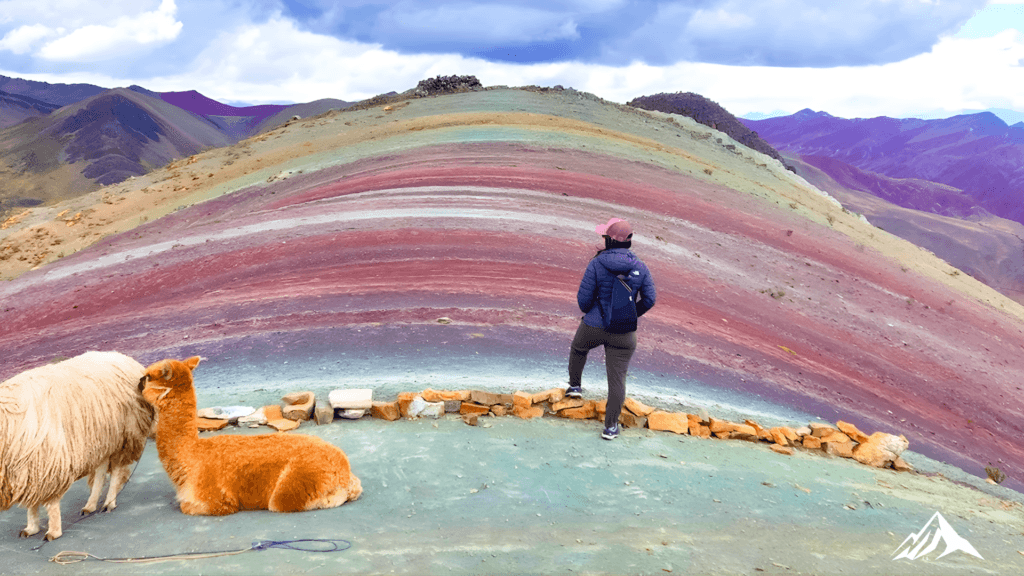
Palcoyo’s Andean essence is felt in its tranquility and spiritual atmosphere. Unlike Vinicunca, Palcoyo features several rainbow mountains, natural viewpoints, and gentle trails that allow for a reflective and peaceful experience.
Walking through Palcoyo means enjoying the landscape without rush, listening to the whisper of the wind, and feeling the energy of the Andes with every step.
Must-See Highlights: The Stone Forest and panoramic views of Ausangate.
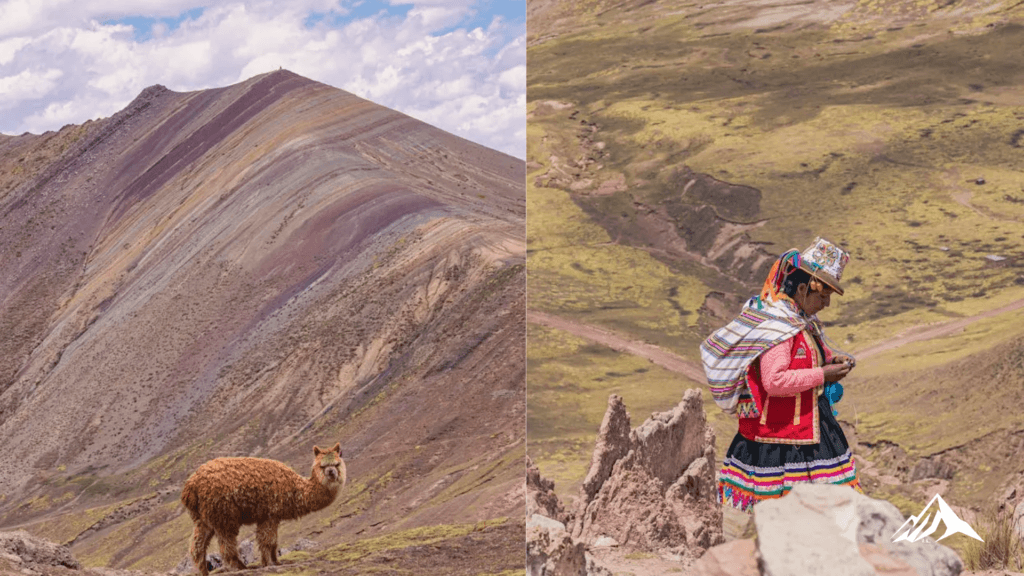
Visiting Palcoyo is more than a hike—it is a cultural immersion. Along the way, you’ll encounter high-Andean communities where alpaca and llama herding continues to shape daily life.
Some tours include opportunities to interact with local residents and learn about simple rituals of gratitude toward the Earth.
Important Note: Always respect local traditions and ask for permission before taking photographs.
Best time to visit: April to October (dry season).
What to bring: Warm clothing, trekking shoes, sunscreen.
How to get there: From Cusco via Checacupe.
Where to stay: In Cusco city or nearby rural communities.
Helpful Advice: Palcoyo is ideal for travelers who want to experience a rainbow mountain without undertaking a physically demanding hike.
The rainbow mountains of the Andes teach us that nature is meant to be admired, felt, and honored. In Palcoyo, colors carry messages, and the landscapes offer a deeply spiritual experience.
Explore this journey with AndeXperience Travel Agency.
Book your next adventure with us and immerse yourself in authentic Peru.
Have you ever imagined a place where the driest desert meets the vast blue of the Pacific Ocean? That place exists, and it is called Paracas. Located on the central coast of Peru, this natural refuge blends wildlife, ancient history, and landscapes that feel otherworldly. Feeling the ocean breeze as you sail around rocky formations inhabited by sea lions or admiring the contrast between reddish dunes and turquoise waters is an experience that transforms the way you travel.
In this AndeXperience guide, you will discover the secrets of the Reserve and the Ballestas Islands, with all the information you need for a memorable getaway.
Established in 1975, the Reserve protects one of the most significant marine–coastal ecosystems in the country. It was also home to the Paracas culture (700 BC), renowned for its textiles and advanced medical knowledge. Exploring this area feels like walking through living history.
The name “Paracas” comes from Para (rain) and Acco (sand), referring to the strong winds that have shaped the landscape. One of its most famous mysteries is El Candelabro, a geoglyph over 180 meters long that can be seen from the sea.
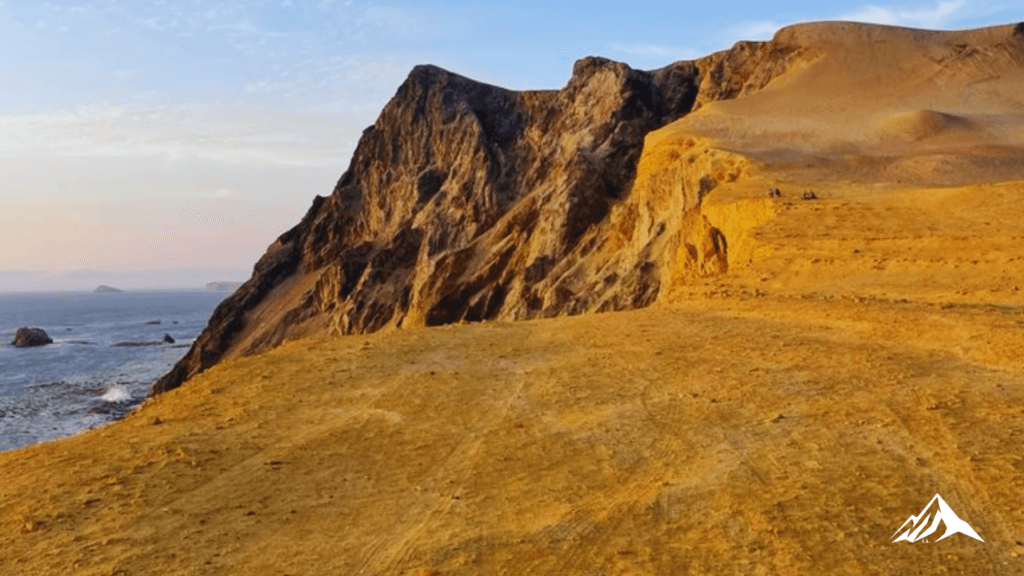
The land tour lasts approximately 3 to 4 hours and includes:
Useful tip: Entrance fee is S/ 11 soles or S/ 17 for a combined ticket including the Ballestas Islands.
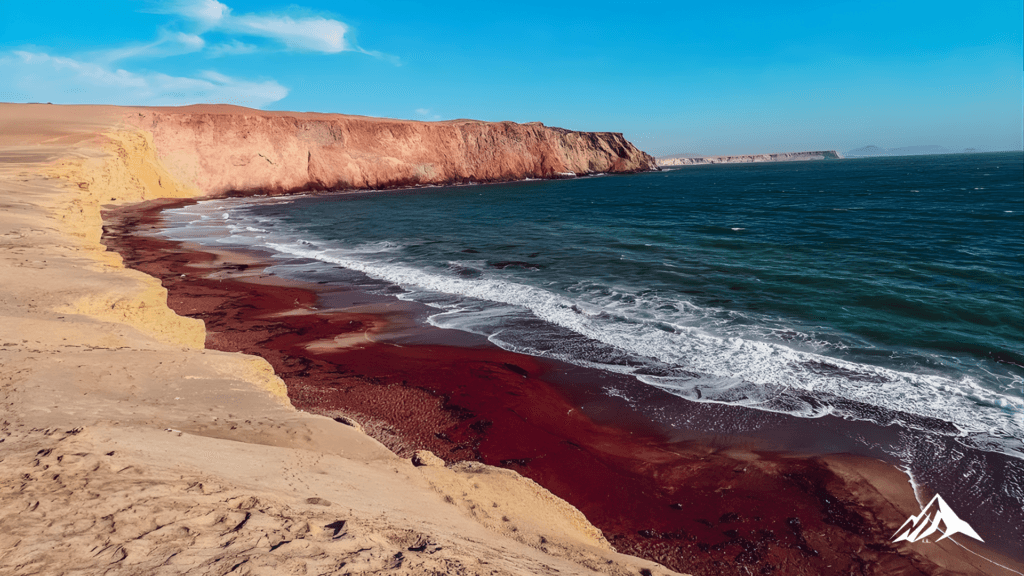
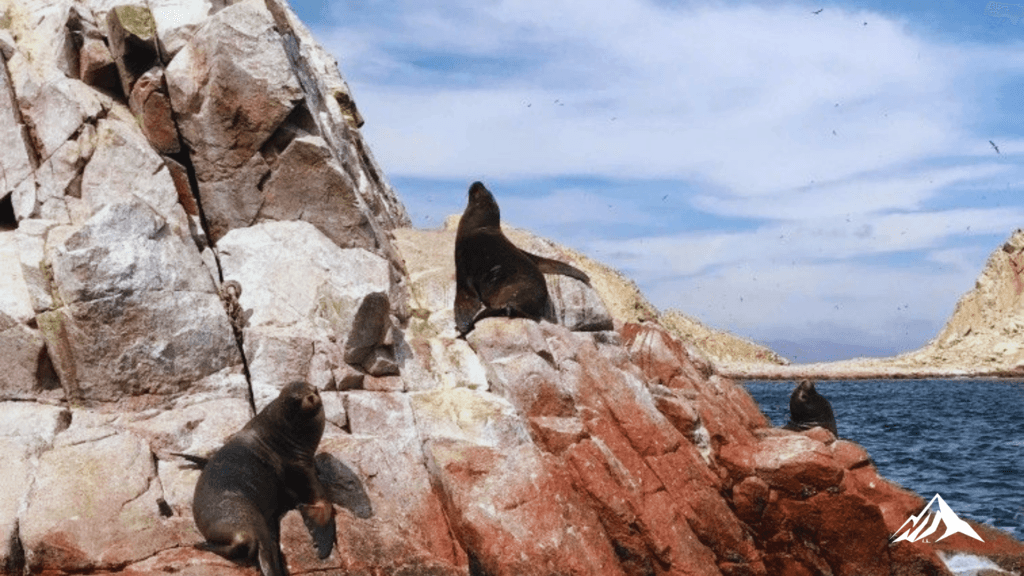
Often called the “Galápagos of the Poor,” the Ballestas Islands offer one of the most impressive wildlife spectacles in Peru. The two-hour tour departs from El Chaco pier and allows you to observe:
Landing on the islands is not permitted to protect the ecosystem, but boats approach close enough for incredible photos. Bring a windbreaker, as the ocean breeze can be strong.
Paracas is famous for its fresh seafood:
Additional suggestion: Visit the Reserve’s Interpretation Center to better understand its ecological importance.
The Reserve and the Ballestas Islands prove that beauty can also emerge from arid landscapes. This destination blends the energy of the ocean with the serenity of the desert, reminding us of the importance of protecting our planet.
Discover this experience with AndeXperience Travel Agency. Secure your next adventure and experience the true essence of Peru.
Humantay Lake captivates visitors not only with its turquoise color, but also with the life that surrounds it. At over 4,200 meters (13,780 ft) above sea level, it hosts a surprising diversity of plants and animals that have adapted to extreme conditions.
In this article, you will discover the flora and fauna around Humantay Lake, its cultural and natural value, and practical tips to experience it responsibly. An invitation to connect with the purest nature of the Peruvian Andes.
The flora and fauna of Humantay Lake are part of the high-Andean ecosystem of Cusco—a fragile and valuable environment that depends on the balance between climate, altitude, and glacial water. Since ancestral times, local communities have protected this space as part of their sacred territory.
Here, life manifests in a subtle yet resilient way. Every plant and animal plays an essential role in maintaining the natural balance of the environment.
Traveler’s Tip: Many of the plants you will see along the trail to Humantay are also used in traditional Andean medicine.
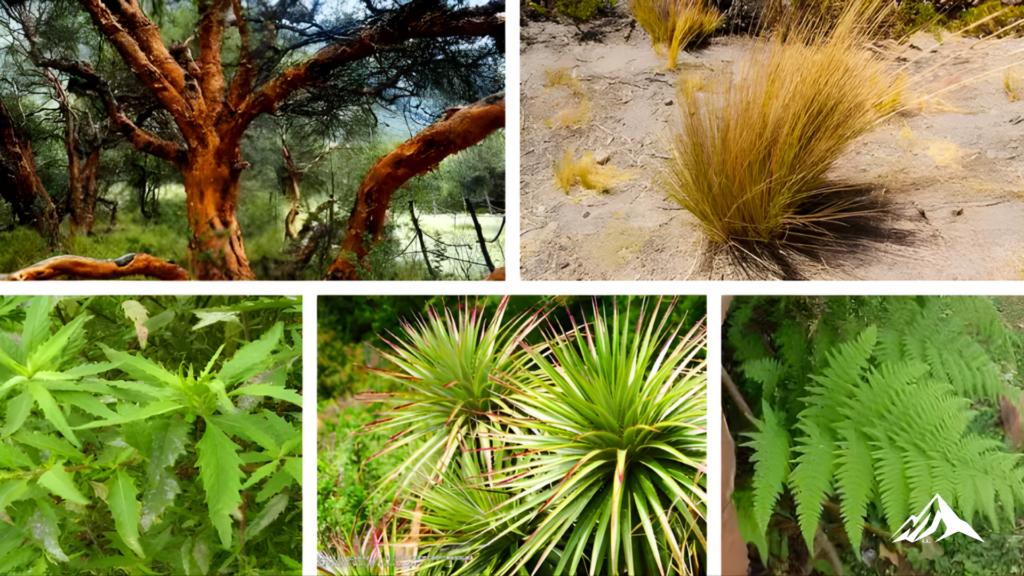
The flora around Humantay Lake consists of species adapted to intense cold, strong solar radiation, nutrient-poor soils, and especially high altitude.
During the rainy months, small wildflowers add color to the landscape, making the trekking experience even more special.
The fauna around Humantay Lake includes emblematic Andean species that roam freely in their natural habitat.
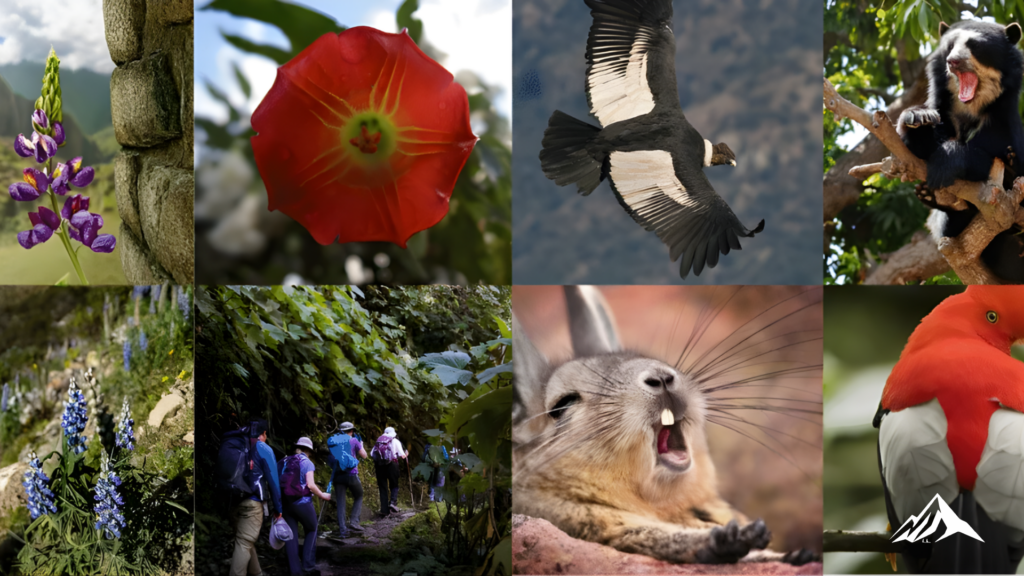
The biodiversity of Humantay Lake holds not only ecological value but also spiritual significance. For local communities, this place is a site of offerings and gratitude to Pachamama (Mother Earth).
During certain times of the year, ancestral rituals are performed to strengthen the relationship between humans and nature.
Important Note: Avoid removing plants, stones, or any natural elements from the area.
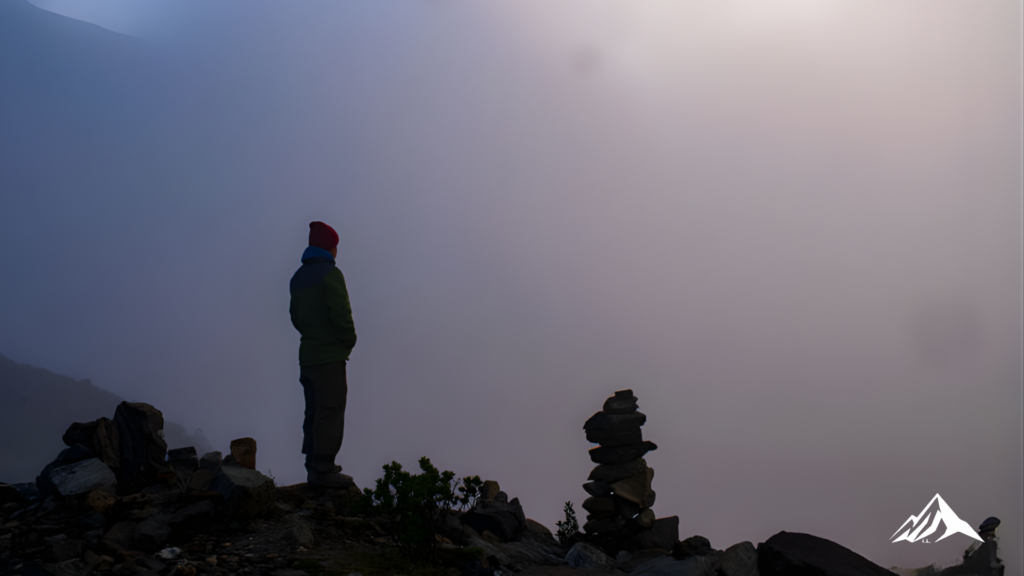
Throughout the trek, travelers enjoy incredible landscapes, natural sounds, and breathtaking views of the majestic Salkantay, which guards the trail during the entire hike.
Pro Tip: Walk at a slow and steady pace to better enjoy the scenery, prevent altitude sickness, and avoid exhaustion.
Traveler’s Note: The Humantay Lake route is often closed in February due to heavy rains.
Exploring the flora and fauna around Humantay Lake is an opportunity to reconnect with nature and understand the ancestral wisdom of the Andes. Every step, every plant, and every animal tells a story of adaptation and balance.
Discover this experience with AndeXperience Travel Agency. Book your next adventure with us and experience the authentic Peru.
"Cusco is a destination that stimulates all the senses. As the ancient capital of the Inca Empire, this city of stone streets and vibrant skies serves as the gateway to Machu Picchu—one of the most breathtaking destinations in the world.
If you have limited time and want to visit the very best of Cusco and Machu Picchu, this guide is perfect for you.
Get ready to discover the ultimate 5-day itinerary for Cusco and Machu Picchu, crafted by the local specialists and designed for travelers seeking authenticity with style."
Cusco was the center of the Inca universe. From here, the roads extended across the vast Tahuantinsuyo. Today, it remains the cultural heart of Peru and the perfect place to explore the Sacred Valley and the majestic city of Machu Picchu.
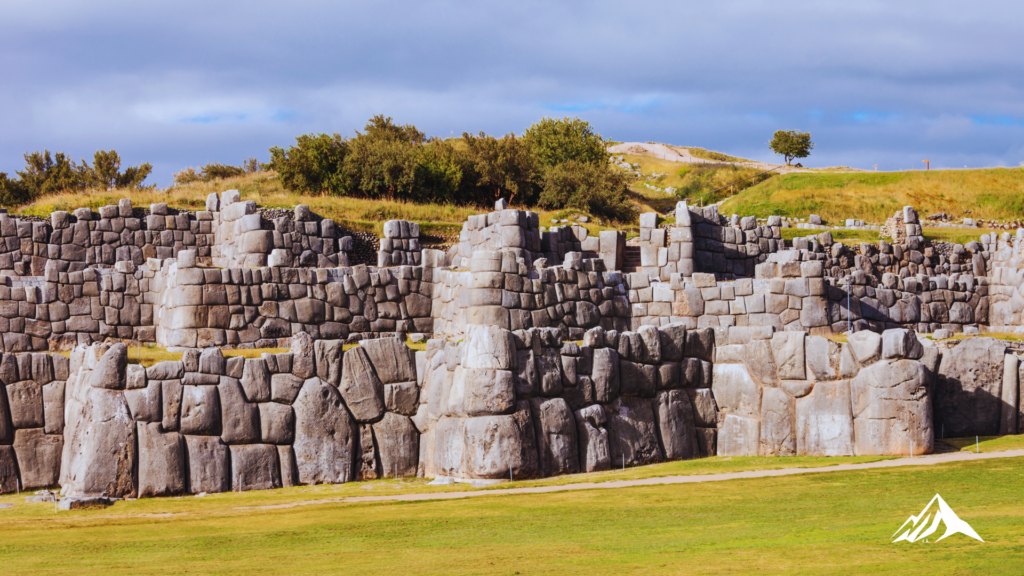
According to tradition, when the Spanish conquerors arrived in the 16th century, they were astonished by the precision of Inca architecture. Even today, the famous Twelve-Angled Stone defies time without a trace of cement.
Traveler Tip: Booking in advance is essential. Machu Picchu has a limited number of daily visitors, and the most requested time slots sell out quickly.
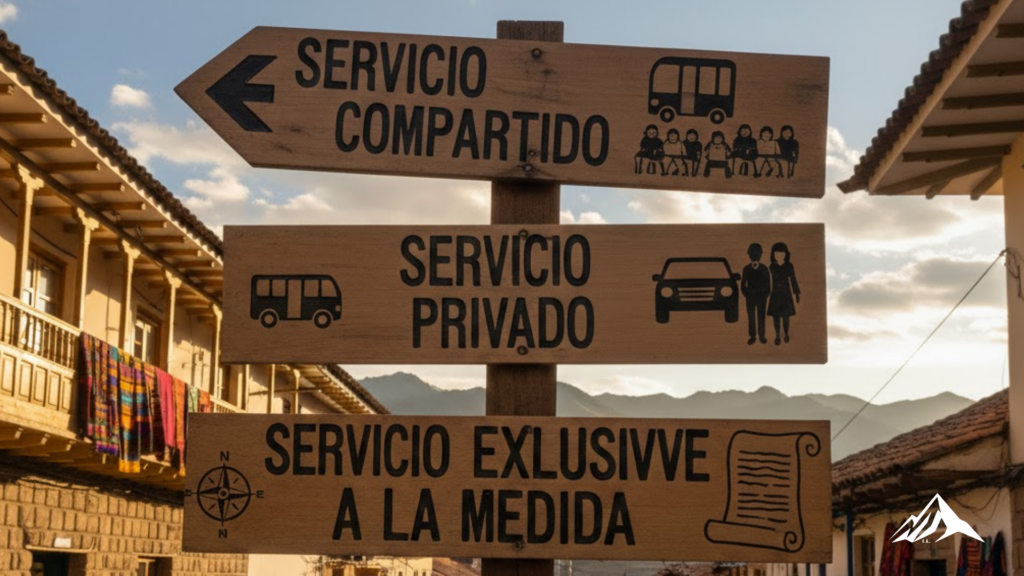
At Andexperience Travel Agency, we understand that every traveler is unique. That’s why we have designed three levels of service to guarantee the best experience in Cusco and Machu Picchu, combining quality, comfort, and exclusivity.
Ideal for enthusiastic travelers who want to explore the main attractions with expert guidance while sharing the adventure with people from around the world.
Designed for those seeking flexibility and more personalized attention for their group of friends or family.
The ultimate expression of exclusivity. Designed for travelers who want to focus solely on enjoying the magic of Peru with the highest standards of service.
An exceptional journey begins with careful planning. AndeXperience Travel Agency is a local operator focused on providing personalized and luxury experiences in Peru.
Each 5-day itinerary in Cusco is crafted according to your interests, personal pace, and travel style.
A well-structured 5-day itinerary in Cusco and Machu Picchu gives you the opportunity to explore ancient temples, unforgettable flavors, and landscapes that seem out of this world — all with the comfort you deserve.
Live this experience with AndeXperience Travel Agency.
Secure your next adventure with us and discover the authentic essence of Peru.
Every year, the Imperial City transforms into a stage of living faith. Thousands of devotees, musicians, and dancers gather in the Plaza de Armas to honor a tradition that has survived for centuries, blending Catholic heritage with the mysticism of the Andean world. If you are looking for an experience that connects you with the deepest essence of Peruvian culture, Corpus Christi is the perfect time to visit Cusco. In this article, at AndeXperience, we take you on a journey through its history, its impressive processions, and the ancestral gastronomy that accompanies this festivity.
To understand Corpus Christi in Cusco, we must look to the past. Before the arrival of the Spanish, the Incas celebrated Inti Raymi and paraded the mummies of their rulers through Qosqo. With the conquest, the Catholic Church replaced these mummies with images of saints and virgins, giving rise to a unique cultural syncretism.
The festivity is always celebrated on a Thursday, 60 days after Easter Sunday. More than a religious ceremony, it represents the adaptation and cultural resilience of a people. Each neighborhood competes to present its patron saint with impressive platforms, embroidered mantles, and vibrant troupes filled with music and color.
Traveler’s tip: The largest bell in South America, the María Angola of Cusco Cathedral, rings only on special occasions — and Corpus Christi is one of them.
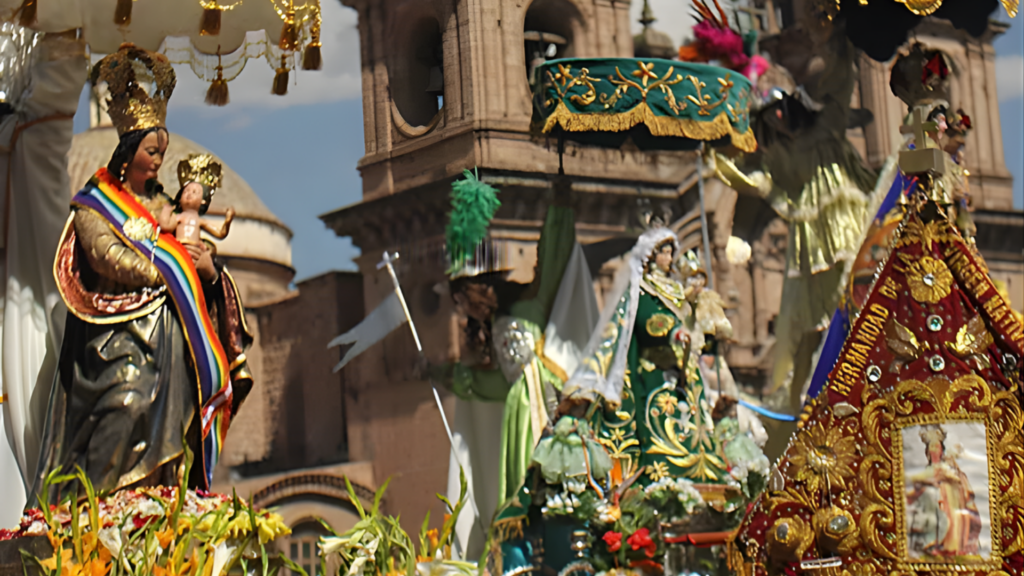
Corpus Christi is a movable feast and lasts for more than a week, although the main day is Thursday.
Pro tip: Arrive at the Plaza de Armas by 10:00 a.m. to experience La Entrada. The encounter between San Jerónimo and San Sebastián is one of the most emotional moments.
On the main day, the Plaza de Armas becomes a sea of people. The processions are a spectacle of sacred art in motion: monumental images, carried on the shoulders of devoted groups, move forward to the rhythm of traditional music.
Among the 15 saints and virgins, the most prominent are:
Seeing these images surrounded by thousands of people under the Andean winter sun is a truly goosebump-inducing experience.
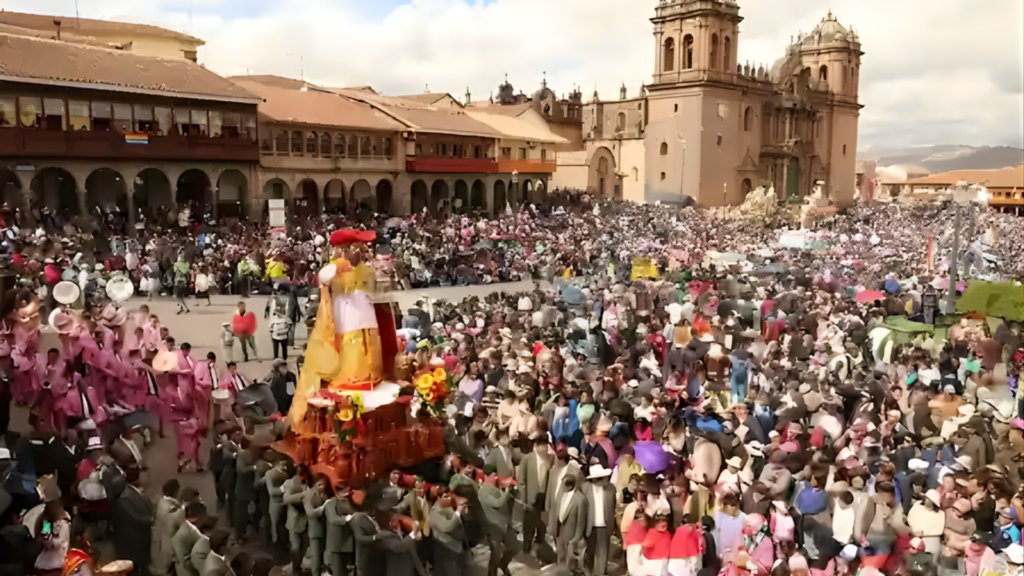
Talking about Corpus Christi means talking about Chiri Uchu, the emblematic dish of the festivity. In Quechua, it means “cold chili,” and it is traditionally eaten only during this time of year.
It is served cold, and tradition says you should try a little of each ingredient to fully enjoy the combination of flavors.
Gastronomic tip: The best option is the fair at Plaza San Francisco. The busiest stalls are usually the most authentic.

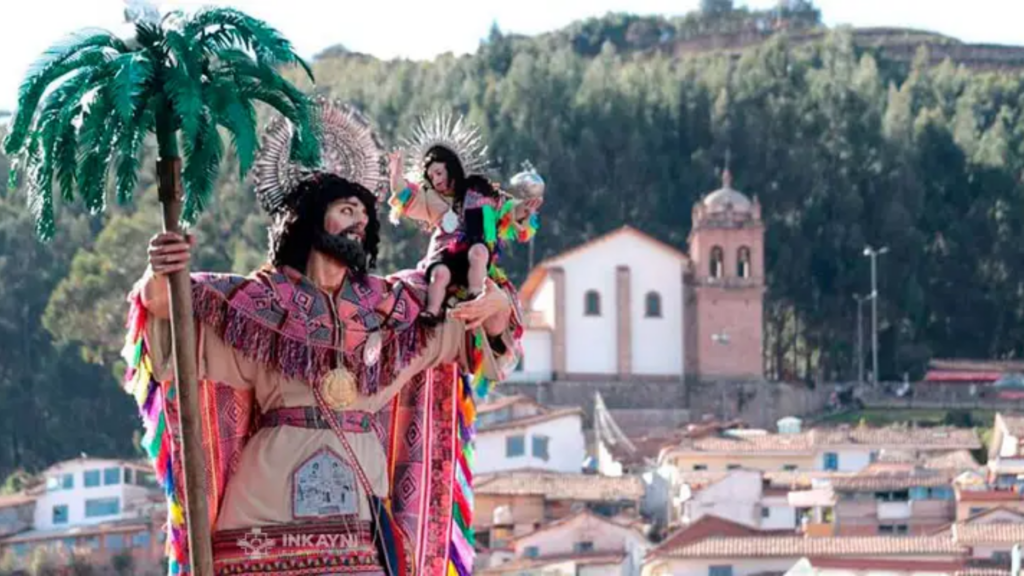
Corpus Christi in Cusco shows that the past is still alive — in the faith of its people, in the shine of the platforms, and in the shared flavor of an ancestral dish. It is an invitation to discover a Cusco that goes far beyond Machu Picchu.
Discover this experience with AndeXperience Travel Agency and live the authentic Peru.
Just a few kilometers from Lima, where the gray Pacific Ocean meets the coastal sky, there is a natural sanctuary that amazes even the most seasoned travelers. The Palomino Islands are not just a marine destination—they are a living stage where hundreds of sea lions rest on golden rocks, guano birds soar along the horizon, and the marine ecosystem shows its millennial balance.
Here you can hear the roar of the sea, feel the salty ocean breeze, and experience the unique thrill of swimming freely alongside these fascinating animals. In this article, you’ll discover everything about the wildlife of the Palomino Islands, their ecological importance, how to visit them from Lima, and why this experience has become one of the most memorable tours in Peru.
The Palomino Islands, located off the coast of the Callao port, are part of Peru’s guano island system—a collection of protected ecosystems with enormous biological value. Since pre-Hispanic times, these islands were vital for guano production, one of the world’s most valuable natural fertilizers.
Today, their true wealth lies in biodiversity.
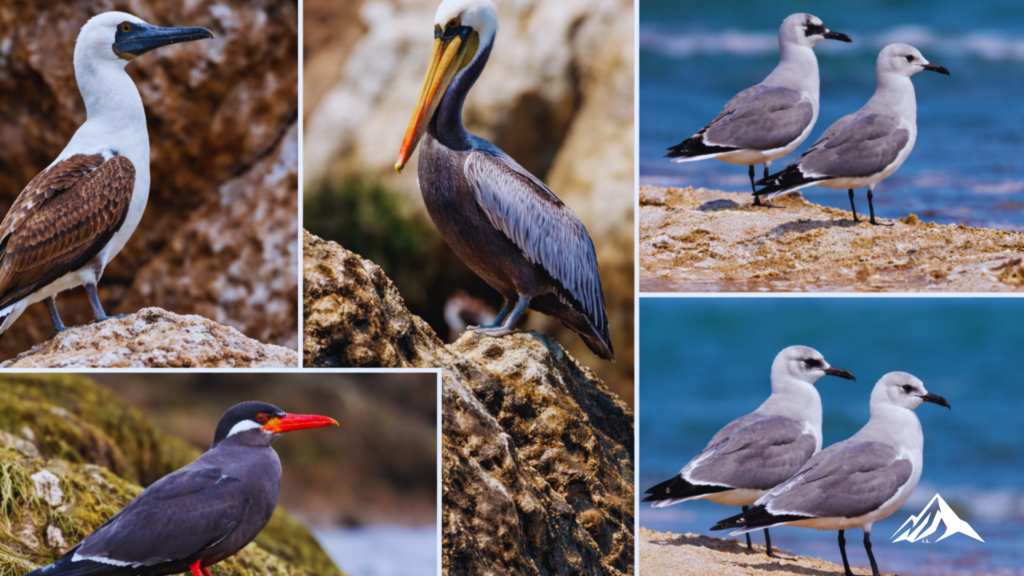
The islands are home to one of the largest colonies of sea lions in the area, along with birds such as the Peruvian booby, pelican, and guanay. The contrast between the deep blue sea and the rocky formations makes the experience almost cinematic.
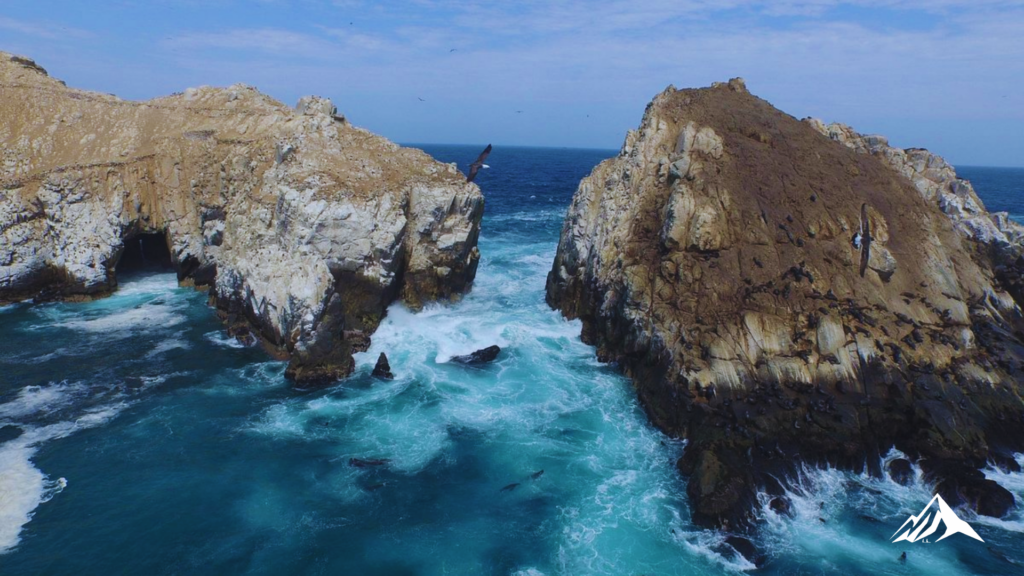
The South American sea lion (Otaria flavescens) is the undisputed star. Curious, playful, and sociable, these marine mammals approach visitors naturally.
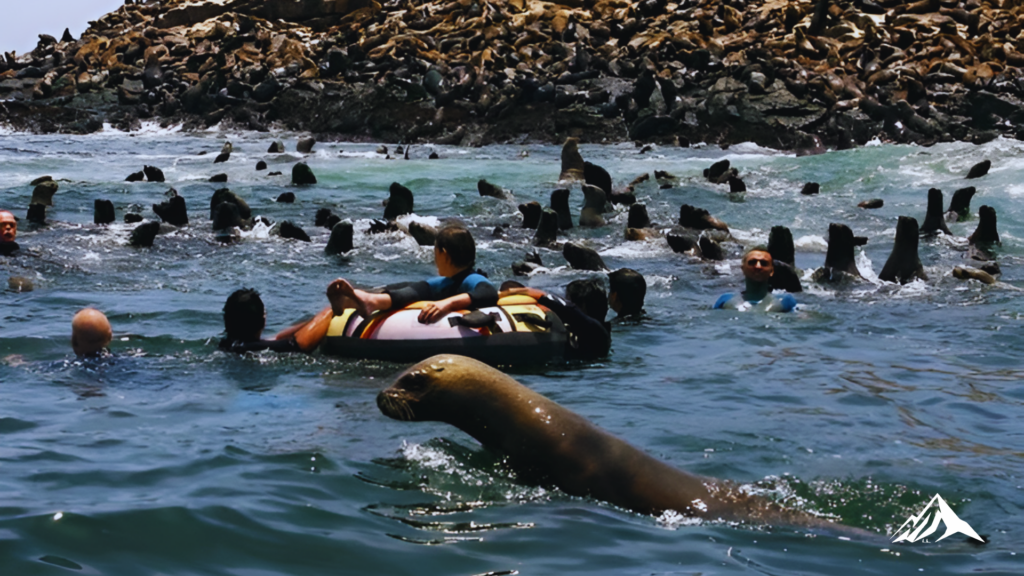
One of the most exciting moments of the Palomino Islands tour is when the guide signals it’s time to enter the water. With a wetsuit and life jacket, you can experience swimming with sea lions in Peru, always under professional supervision.
This is not a zoo or a staged activity—it is a respectful encounter in their natural habitat.
Traveler Tip: The Palomino Islands are part of a protected area, so landing is not allowed. Observation is done from the boat or in the water following strict protocols.
One of the biggest advantages is accessibility. The Palomino Islands are only 30–40 minutes by boat from Callao.
What does the tour include?
Duration: 3–4 hours
Best time: Morning departures usually offer calmer seas and better visibility.
At AndeXperience Travel Agency, we work with certified boats and expert guides who prioritize safety and respect for the ecosystem.
Pro Tip: Book with formal operators that provide insurance, full equipment, and official permits.
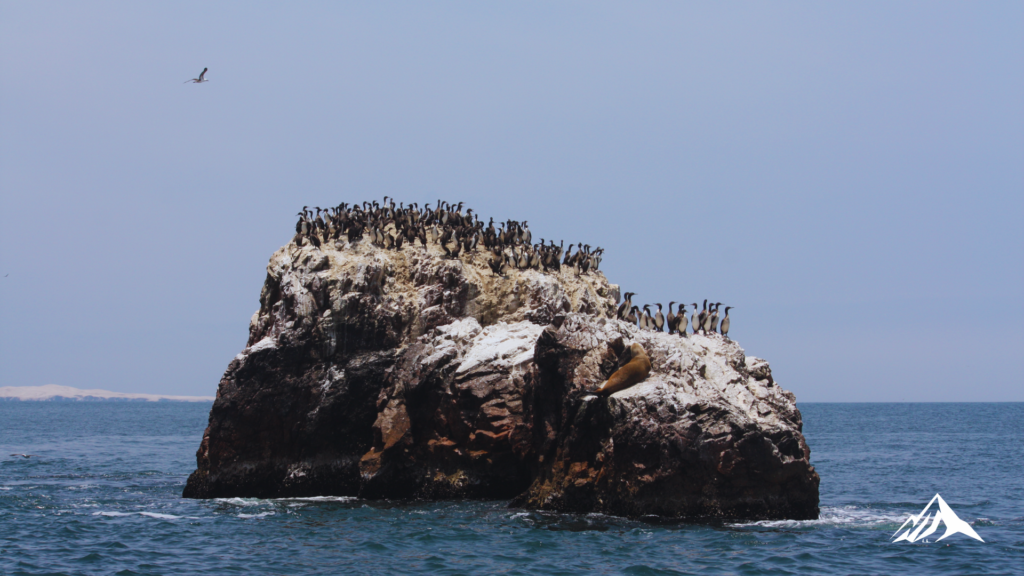
Beyond sea lions, the Palomino Islands’ wildlife is a spectacle in itself.
The ecosystem thrives thanks to the nutrient-rich Humboldt Current, which attracts large schools of fish and supports thousands of seabirds.
Most common birds:
The sky becomes a constant choreography of wings, while the rocks turn white with nesting birds. This balance of sea, birds, and marine mammals makes the islands a natural laboratory of biodiversity.
Important Note: Feeding or disturbing the animals is not allowed. Conservation is everyone’s responsibility.
Entering the water is a moment you’ll never forget. The first contact with the ocean may feel cold, but adrenaline and excitement quickly turn it into pure energy.
Young sea lions are usually the most curious. They approach, spin underwater, and disappear with surprising agility.
This experience combines adventure, connection with nature, and deep respect for marine life. Many travelers compare it to experiences in the Galápagos or Patagonia, but with the advantage of being just minutes from a Latin American capital. And the best part: it can be done in half a day.
Best time to visit: The islands can be visited year-round.
What to bring:
Wetsuits are usually provided by the tour. The trip from Lima to Callao takes approximately 30–45 minutes.
Where to stay:
In a destination where safety and environmental respect are essential, choosing a local operator makes all the difference. At AndeXperience Travel Agency:
Our mission is for you to experience authentic Peru, with real and memorable adventures.
The wildlife of the Palomino Islands proves you don’t need to travel far to have an extraordinary adventure. visit the sea lions in palomino islands in lima peru, you can swim with them, observe unique birds, and discover a thriving protected marine ecosystem.
Peru is not only mountains and ancient culture—it’s also ocean, biodiversity, and experiences that connect with the essence of the modern traveler.
Discover this experience with AndeXperience Travel Agency. Book your next adventure and live authentic Peru.
Overlooking the Pacific Ocean and wrapped in a misty coastal atmosphere, Lima is a city where centuries of history blend with one of the most vibrant culinary scenes in the world. Known as the City of Kings, this dynamic capital offers travelers a fascinating mix of colonial architecture, world-class gastronomy, artistic neighborhoods, and breathtaking ocean views.
For many visitors to Peru, Lima is the gateway to iconic destinations like Machu Picchu or Cusco. But those who take the time to explore the city quickly discover that Lima itself is an unforgettable destination.
In this complete Lima Peru travel guide, you will discover the best things to do in Lima, the most fascinating neighborhoods, where to stay, what to eat, and the perfect Lima itinerary for 3 days. Whether you are a culture lover, foodie, or adventure traveler, Lima promises experiences that will stay with you long after your journey ends.
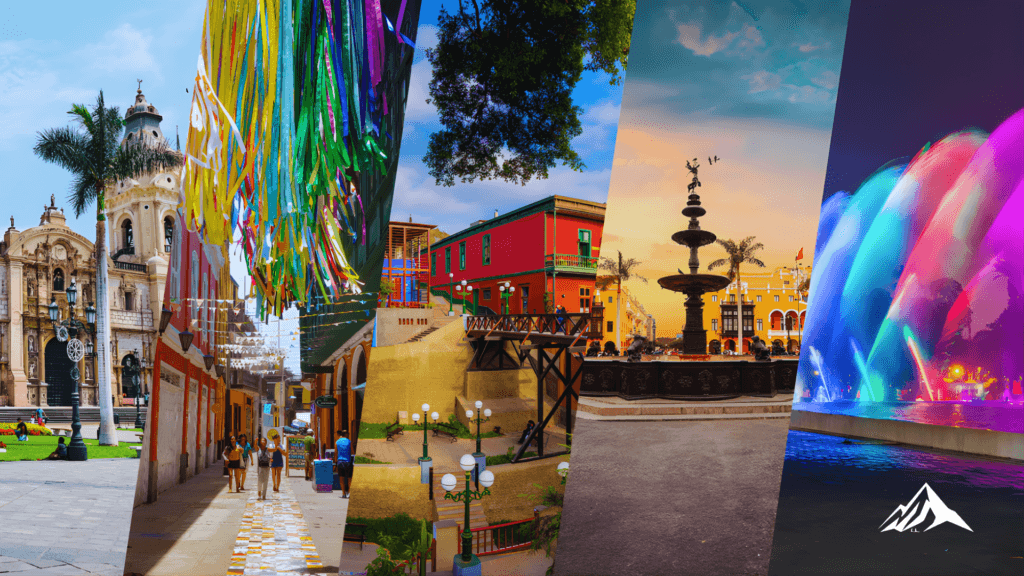
Founded in 1535 by Spanish conquistador Francisco Pizarro, Lima quickly became the political and cultural center of colonial South America. Today, its historic center — a UNESCO World Heritage Site — preserves magnificent architecture, grand plazas, and centuries of history carved into stone balconies and baroque churches.
The heart of the city beats around the elegant Plaza Mayor of Lima, surrounded by landmarks such as:
Walking through these streets feels like stepping into the colonial past of South America.
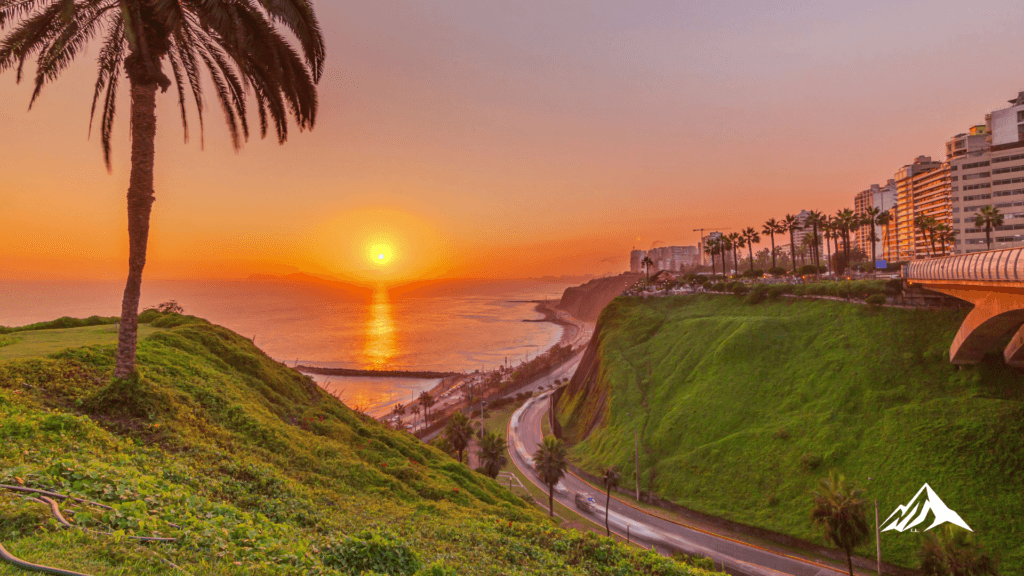
Miraflores is one of the most popular areas for travelers. Its dramatic cliffs overlook the Pacific Ocean, creating some of the most spectacular urban coastal scenery in Latin America.
Must-see Miraflores attractions include:
Traveler tip: Sunset along the Miraflores cliffs is one of the most beautiful experiences in the city.
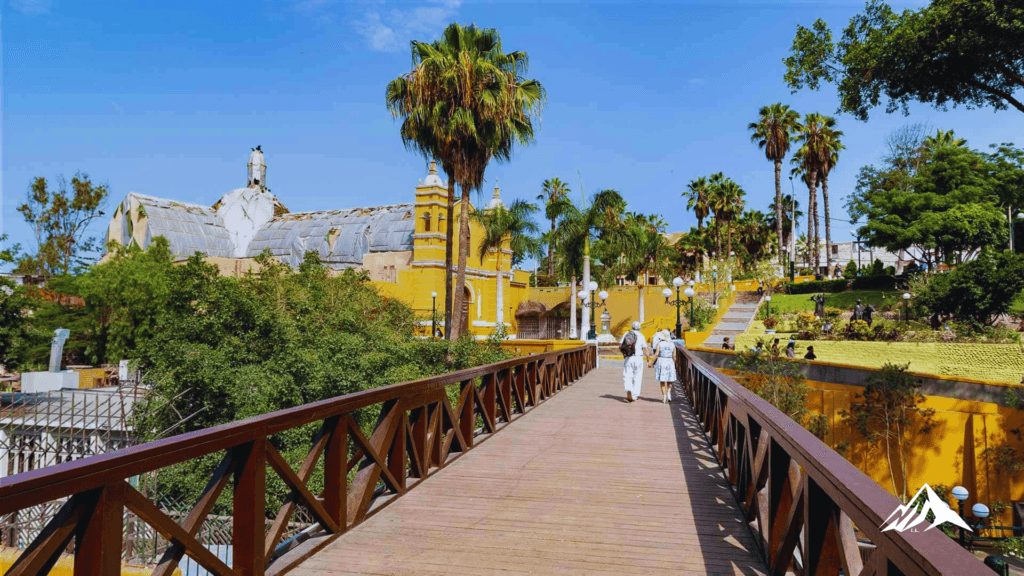
Just south of Miraflores lies Barranco, Lima’s most artistic and romantic neighborhood.
Colorful murals, colonial mansions, and lively cafés give Barranco a creative energy that attracts artists and travelers alike.
Highlights include:
Traveler tip: If you cross the Bridge of Sighs while holding your breath, legend says your wish will come true.
If there is one reason many travelers visit Lima, it is the food. The city has become the gastronomic capital of Latin America, where ancient Peruvian ingredients meet innovative culinary techniques.
Signature dishes include:

The city is home to some of the world’s most celebrated restaurants:
These culinary landmarks have helped position Peru among the world’s top gastronomic destinations.
But equally memorable are Lima’s local markets and small neighborhood eateries, where authentic flavors tell the story of Peru’s diverse regions.
Important note: Try a pisco sour, Peru’s national cocktail made with pisco, lime juice, and egg white.
Many travelers ask: How many days in Lima Peru are enough?
While you could see the highlights in one day, the ideal stay is 2 to 3 days.
| Day | Experience |
| Day 1 | Explore Lima Historic Center and museums |
| Day 2 | Discover Miraflores and Barranco |
| Day 3 | Gastronomic tour or coastal excursion |
This balance allows travelers to experience culture, gastronomy, and modern Lima without rushing.
Lima’s central location makes it the perfect starting point for unforgettable coastal adventures.
Located about four hours south of Lima, Paracas is famous for the wildlife-rich Ballestas Islands.
Visitors can see:
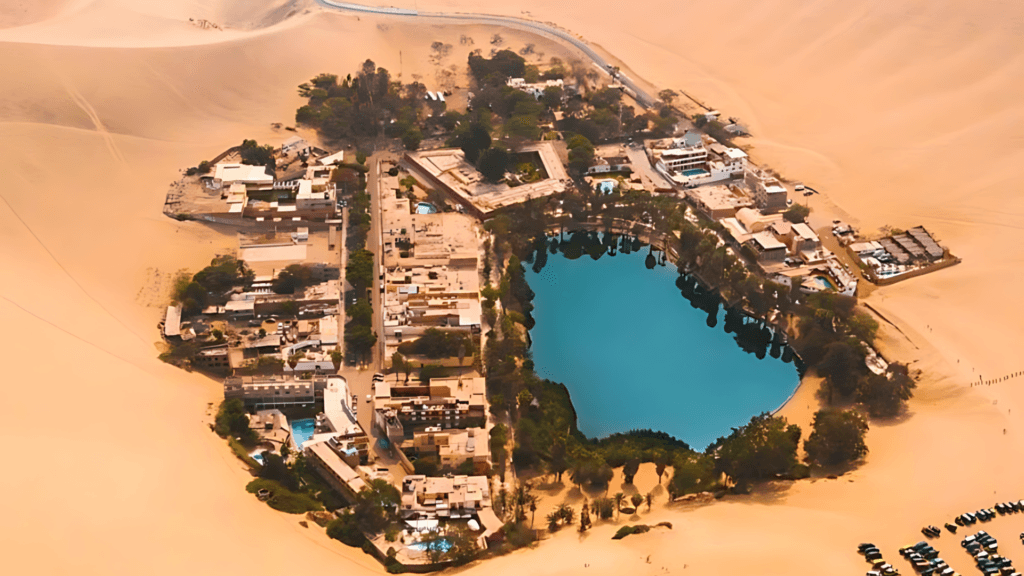
Near the city of Ica lies Huacachina Oasis — a magical lagoon surrounded by towering sand dunes.
Activities include:
Traveler tip: Combine Paracas and Huacachina in a single day trip from Lima.
Choosing the right neighborhood can transform your experience in Lima.
| Area | Why Stay Here |
| Miraflores | Safe, modern, ocean views |
| Barranco | Artistic and nightlife |
| San Isidro | Luxury hotels and financial district |
When the sun sets, Lima reveals a different personality.
The city’s nightlife scene blends stylish cocktail bars, live music venues, and vibrant clubs.
Best nightlife areas:
A perfect night might include craft cocktails, live Afro-Peruvian music, and late-night street food.
Lima has a unique coastal desert climate.
| Season | Weather |
| December – April | Sunny and warm |
| May – November | Cooler with coastal fog |
Best time to visit: December to April, when the city enjoys clear skies and sunny afternoons.
December to April for warm weather and sunshine.
Most travelers arrive through Jorge Chávez International Airport, Peru’s main international gateway.
Miraflores remains the best option for most visitors due to safety, restaurants, and ocean views.
From colonial plazas and artistic neighborhoods to world-class cuisine and breathtaking ocean views, Lima is far more than a gateway city — it is a destination rich in culture, history, and unforgettable experiences.
Whether you wander through the historic streets, savor award-winning gastronomy, or watch the sunset over the Pacific, Lima reveals the soul of Peru in every moment.
Discover this experience with AndeXperience Travel Agency.
Book your next adventure with us and experience the authentic magic of Peru.






Company name: Andexperience Travel Agency S.A.C.
Ruc: 20614773210



Copyright © 2026. AndeXperience Travel. All Right Reserved